
Palm Beach County Parole Versus Probation
Parole is discretionary release from a parole-eligible prison sentence. In Florida, the Florida Commission on Offender Review makes parole decisions for the limited group of people who remain eligible under older sentencing laws. Ordinary parole was largely abolished for crimes committed on or after October 1, 1983, though eligibility still depends on the offense date, sentence, and governing statute. Probation is different. A court orders probation as a community sentence or as a term that follows confinement. It may exist without any state-prison stay.
Florida Department of Corrections community corrections officers supervise many state probation, parole, conditional release, and community control cases. The exact label on the official record matters. Calling every supervised person a parolee can hide the authority that set the term and the process that controls a violation or discharge.
| Supervision | How it starts | Primary record |
|---|---|---|
| Parole | Commission-approved release from an eligible older prison sentence | FCOR action plus FDC Supervised Population |
| Probation | Court-ordered community sentence or post-custody term | Court docket plus FDC record when state-managed |
| Conditional release | Statutory supervision after prison for a qualifying case | FDC supervision record and FCOR action where applicable |
| Community control | More restrictive court-ordered community supervision | Court order and FDC supervision record |
- Discharge
- The formal end of a supervision term.
- Absconder
- A supervised person whose location is unknown and for whom a violation warrant has issued.
- Active Suspense
- An active case in which direct contact is temporarily unavailable, often due to jail or facility custody.
- Scheduled termination
- The expected end date in the database, not a final discharge certificate.
Verify Palm Beach County Supervision
The FDC Supervised Population Information Search is the first statewide check for a released person on FDC-managed supervision. Search by DC number when it is known. A name search can return several people, so compare the date of birth, photograph, county, case number, offense date, and sentence date. FDC says the full database refreshes weekly, while termination dates and location changes update nightly. A new court action may therefore appear in the Palm Beach case docket before all supervision fields align.
The official FDC search form shows the fields available for a Palm Beach County parole or probation lookup.
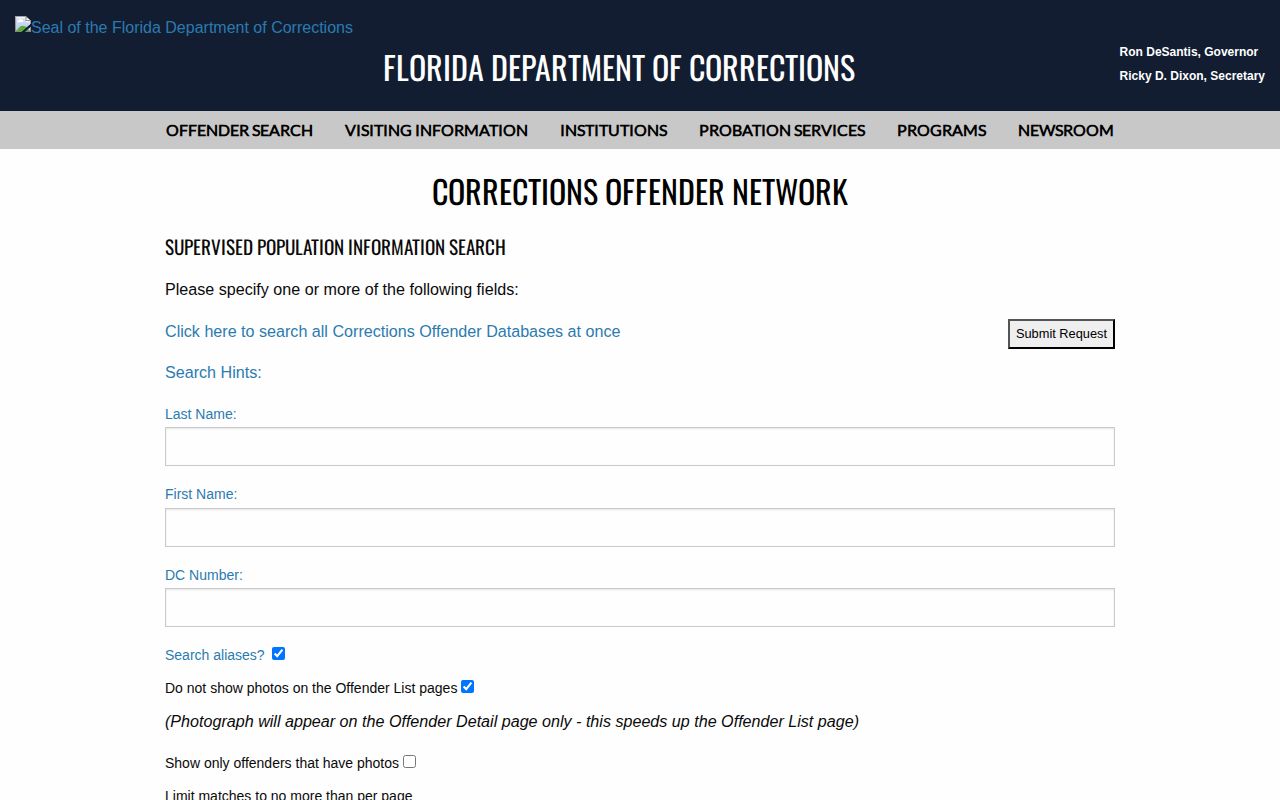
Use the returned DC number to keep the match tied to one person as the inquiry moves from the state record to the local office or court case.
- Open Supervised Population and enter the exact DC number, or use a carefully matched first and last name.
- Confirm Current Status, Supervision Type, Supervision Begin Date, Scheduled Termination Date, and Current Location.
- Compare the Palm Beach County case number and offense details with the Clerk’s criminal docket when the term came from a local case.
- Follow Current Location to the listed office. Contact that office if the status is new, blank, or inconsistent with a court order.
- Use the separate Absconder/Fugitive search only when the supervision record or court indicates a violation or warrant.
A county probation case that never entered FDC’s state system may appear only in the court file and the responsible local program. A blank FDC result does not prove that no community term exists. The Palm Beach County released inmate search paths explain how to reconcile jail, court, and state records without treating one missing result as a discharge.
Palm Beach County Supervision Office
FDC Circuit 15 covers all of Palm Beach County. Its office list includes West Palm Beach Central and Intake, a Lake Worth-area office, Belle Glade, and Delray Beach. The person’s live Current Location field is the sound route to the right office. An address from the circuit list should not be treated as that person’s reporting site without a matching official record.
315 S. Dixie Highway, Suite 101
West Palm Beach, FL 33401
561-837-5015
palmbeach.cir@fdc.myflorida.com
The supervision result can display the supervision type, term dates, office, offenses, and case details. FDC cautions that status and location data can change. Ask the listed office for formal termination or discharge documentation when the expected end date has passed but the record remains active.
The official supervision result layout illustrates how Palm Beach County probation and parole fields are grouped.
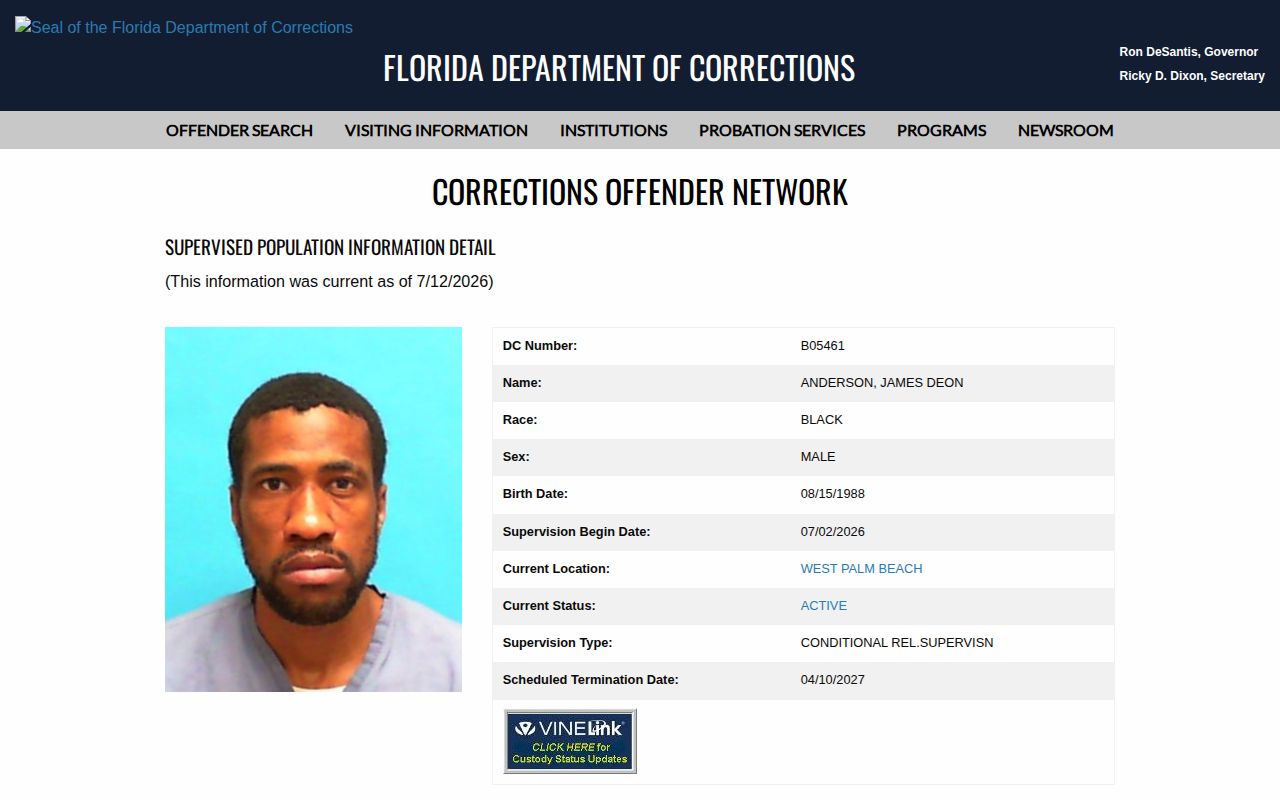
Residential details should be handled with care. The useful verification fields are the status, type, dates, county case, and supervising office.
Note: A Scheduled Termination Date is an expected endpoint; only the supervising authority can confirm that discharge actually occurred.
Palm Beach County Absconder Status
Supervision conditions come from the court, FCOR, or another lawful release authority. They vary by case. The public record may show the supervision type and status, but it does not replace the written order. A missed report or other alleged breach can lead to a violation process. Under Florida Statutes section 947.141, specified post-prison supervision violations can lead to a warrant and revocation proceeding. A Commission panel may revoke release, reinstate it, or enter another permitted order.
FDC’s status words describe the current supervision state. Active means active community supervision. Active Suspense still means the case is open, but the person is temporarily unavailable for direct contact, often because another jail or facility holds them. Absconder means the person is unavailable for supervision, their location is unknown, and a violation warrant has issued. None of those labels cancels the historical fact of an earlier release.
VINELink should not be used to infer a Palm Beach County probation or parole status. VINE reports custody events from participating agencies. The FDC Supervised Population and Absconder/Fugitive databases are the supervision sources, while the Palm Beach court docket records the controlling orders.
The separate FDC Absconder/Fugitive search is built for this narrow status and is the source shown below.
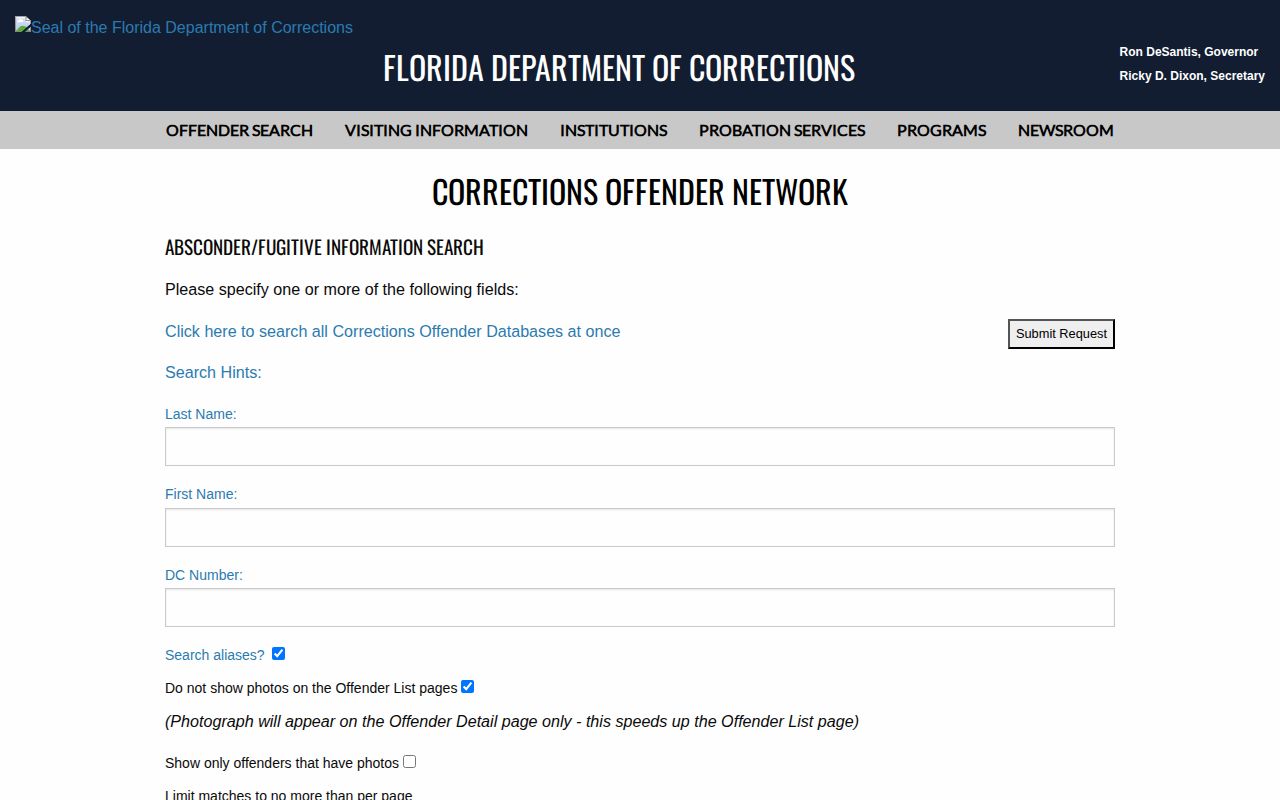
FDC lists an Absconder Unit line for routine information and directs urgent facts to local law enforcement. A database result is not a prompt for personal contact or intervention.
Palm Beach County Parole Hearing Records
For the smaller group of parole-eligible Florida cases, the Commission record adds a second layer. FCOR’s Commission Voting Schedule lists current meeting dates and access details. In-person parole hearings normally occur on Wednesdays, with some follow-up proceedings by video or teleconference on Thursdays. A linked agenda can show a name, DC number, county, offense, case number, and the type of review.
An agenda is not a decision. Labels such as Initial, Subsequent, Effective, Extraordinary, revocation, or conditional-release establishment describe the matter set for review. They do not establish that parole was granted, denied, deferred, or revoked. When the final outcome matters, use FCOR’s public-records channel and ask for the final order, vote sheet, effective-release-date action, revocation order, or clarification by name, DC number, hearing date, and case number.
The live Commission Voting Schedule is the source for current Palm Beach County parole hearing dates.
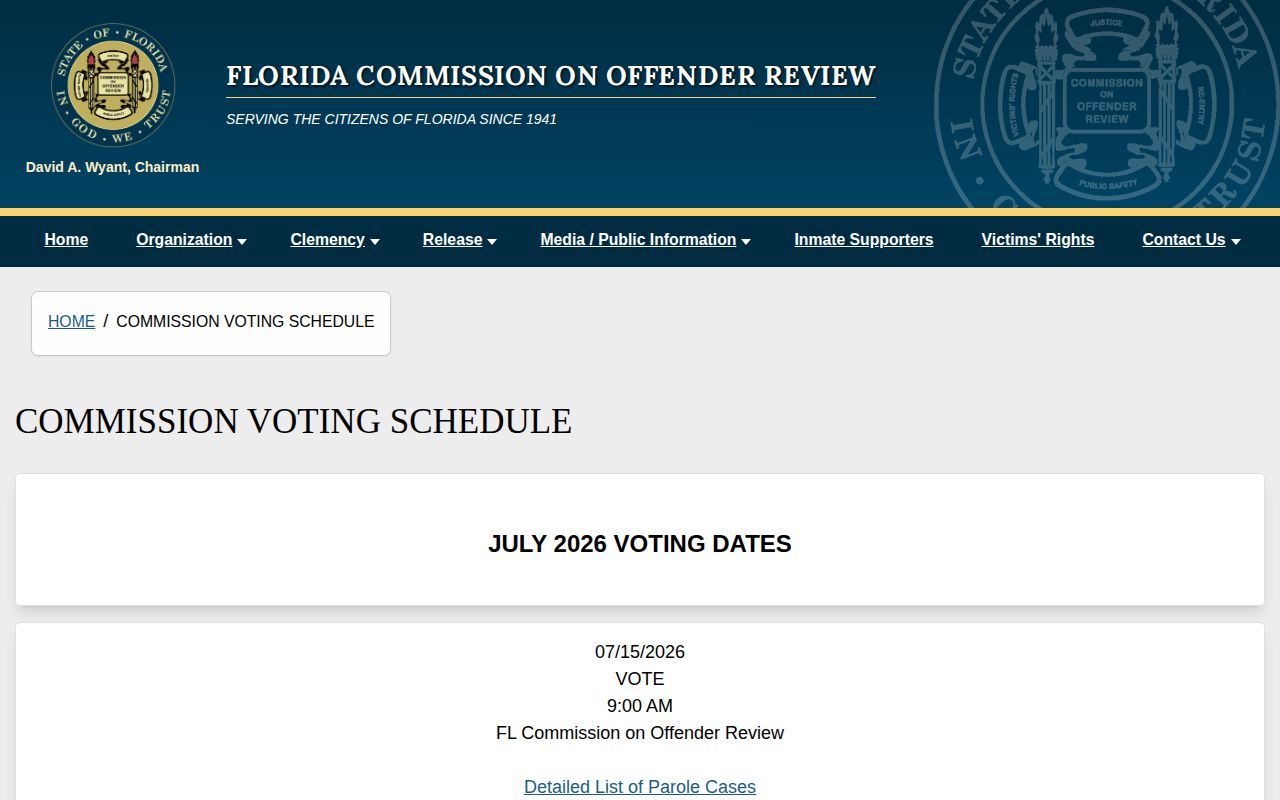
Because dates and remote access details change, use the current calendar rather than relying on an older saved agenda.
Palm Beach Release Reentry Network
Palm Beach County Justice Services adds a local reentry layer after jail, state-prison, or federal release. Its Reentry Services network names Gulfstream Goodwill Industries, The Lord’s Place, and the City of Riviera Beach Reentry Center as contracted providers. Services include navigation for health needs, transportation, case management, and community support. This network is distinct from FDC supervision. Receiving reentry help does not establish parole, probation, or an active court term.
The distinction works both ways. A person may be fully discharged from supervision and still seek county reentry help. Another person can live in the community under an active supervision term while using the same kinds of support. For a records question, rely on the FDC result, the court docket, and the supervising office. For service navigation, use the county network’s published contact point.
Palm Beach County Supervision Discharge
A supervision term ends through a lawful termination or discharge, not merely because the planned date arrives. The FDC record’s Scheduled Termination Date is useful, but a violation, warrant, court order, tolling event, or correction can alter the result. Tolling means that time toward the term stops running during a legally defined period. The current status and official discharge record settle whether the case closed.
For an FDC-managed Palm Beach County parole or probation term, ask the Current Location office or FDC Central Records for termination documentation. Match it to the court docket or FCOR order that controlled the term. If the person also has a new custody record, do not read the supervision discharge as release from that separate case. Custody, supervision, and court status are linked, but each answers a different question.
A formal records request should identify the person by DC number and name, state the Palm Beach County case number when known, and ask for the document that records termination or discharge. If parole was involved, request the Commission’s final action as well. A clean sequence may include the prison Release Date, a supervision begin date, a scheduled end date, and a later termination record. Those dates describe different events. Keeping them separate prevents an expected supervision endpoint from being reported as a completed discharge.